Panchakarma
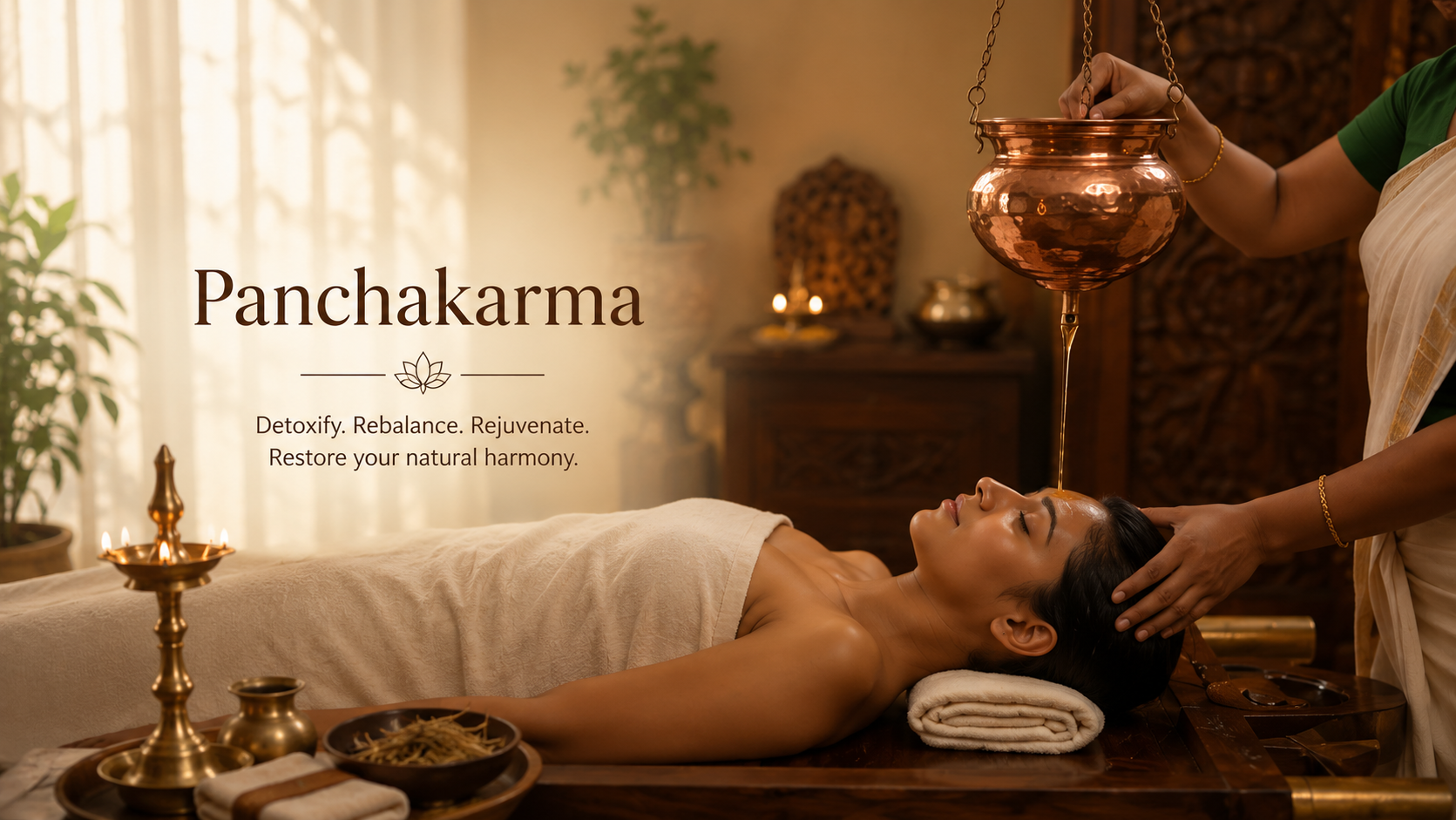
Understanding Panchkarma
Panchkarma is a classical Ayurvedic approach designed to eliminate accumulated toxins (Ama) and restore systemic balance. It works at a deeper level to support digestion, metabolism, and overall internal regulation.
Rather than functioning as a generic detox method, Panchkarma is individualised based on body constitution (Prakriti), current imbalance, and overall strength of the system. The process focuses on cleansing internal pathways, allowing the body’s natural regulatory mechanisms to reset and function more efficiently.
Preparation and Restoration Around Detox
Effective detoxification depends on proper preparation and guided execution. Through Purva Karma, the body is gradually prepared by strengthening digestion and mobilising toxins, ensuring that the system is ready for deeper cleansing.
Equally important is the post-detox phase (Paschat Karma), where the body is stabilised through controlled diet, routine, and gradual return to normal activity. This phase ensures that the benefits of detoxification are sustained over time. Without proper preparation and restoration, detoxification may remain incomplete or place unnecessary strain on the system, highlighting the importance of a structured and supervised approach.
When is Panchkarma Considered
Panchkarma is generally considered when there is a need for deeper systemic cleansing and restoration.
It may be relevant in conditions such as:
- Chronic digestive and metabolic imbalance
- Accumulation of toxins (Ama-related patterns)
- Persistent fatigue and low energy
- Reduced immunity or frequent illness
- Skin-related disorders and recurring conditions
- Seasonal cleansing and preventive health care
The decision to undergo Panchkarma depends on individual assessment, ensuring that the body is appropriately prepared and capable of undergoing the process.
True detoxification is not just cleansing—it is preparation, process, and restoration working together